
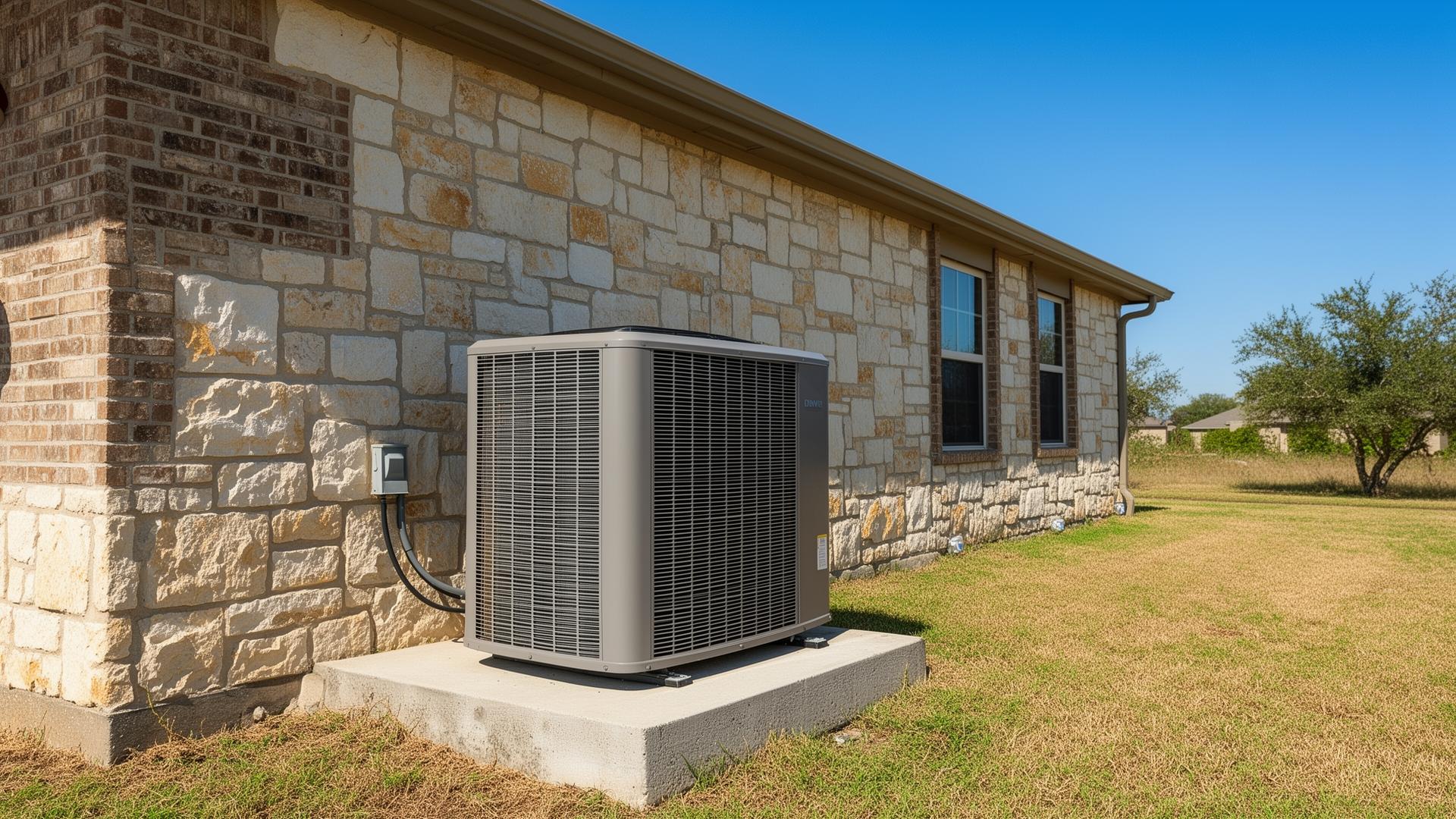
Short answer: SEER2 is a mileage rating for your air conditioner — a higher number means less electricity to cool the same house. But the biggest number on the showroom floor isn't automatically the smartest buy in San Antonio. For most homes here, the sweet spot is a solid mid-range SEER2, sized right and installed well. Here's how to think about it without the sales pressure.
What SEER2 actually measures
SEER2 stands for Seasonal Energy Efficiency Ratio (the "2" just means the newer, stricter testing standard). Think of it like miles per gallon for your AC: how much cooling you get for the electricity you put in, averaged across a cooling season.
A higher SEER2 means the system sips less power to hold your house at 72°. 14.3 SEER2 is the current Texas minimum. From there, ratings climb to 15, 16, 18, and on past 20 for the premium variable-speed systems. More SEER2 = lower electric bills for the same comfort. The catch is what it costs to buy those extra points — and whether you'll ever get that money back here in South Texas.
The SEER2 number that's actually worth it here
We run our ACs harder and longer than almost anywhere in the country — basically March through October. That cuts both ways:
- It rewards efficiency. Because your system runs so many hours, a more efficient unit saves you real money every month of our long cooling season.
- But it has limits. The jump from 14.3 to about 16 SEER2 pays for itself for most San Antonio homes. The jump from 16 to 20+ costs a lot more up front, and unless you've got a big house, sky-high bills, or you really want the quiet variable-speed comfort, the payback stretches out for years.
For a typical San Antonio home, a 15–16 SEER2 system is the honest sweet spot: a real bill cut over the old builder-grade unit, without paying a premium you won't recover. Bigger or higher-end homes — and folks planning to stay 15+ years — are where the 18+ systems start to make sense.
SEER2 and your CPS Energy bill — the real math
Here's roughly how it shakes out. Say your old system is limping along at the equivalent of 10 SEER. Moving up to a 16 SEER2 system can cut the cooling part of your electric bill by a third or more during our brutal summer months. On a $300 July CPS Energy bill, that's real grocery money back in your pocket — every month, all summer.
Going from 16 to 20 SEER2 saves more on paper, but the extra savings get smaller while the equipment costs noticeably more. That's the point where we'll tell you honestly whether the upgrade pencils out for your house, or whether you're better off keeping that money.
CPS Energy also offers rebates on higher-efficiency systems, and we help you put the paperwork together — so a more efficient unit can cost less out of pocket than the sticker suggests.
Why the SEER2 number isn't the whole story
This is the part the showroom pitch skips: a high SEER2 rating only delivers if the system is sized and installed right. A 20 SEER2 unit that's oversized, starved for airflow, or hooked to leaky ductwork will lose to a properly installed 16. We've seen it plenty.
Three things matter just as much as the SEER2 number:
- Right size. Bigger isn't better. An oversized AC short-cycles, never pulls the humidity out, and leaves your house cool but clammy.
- Staging. A single-stage unit runs full-blast or off. A two-stage or variable-speed system runs longer and gentler — which, in muggy South Texas, controls humidity far better.
- Ductwork and airflow. The best AC in the world can't fix bad ducts. If half your cool air is leaking into the attic, your SEER2 rating is just a number on a sticker.
So when someone leads with "you need the highest SEER," that's your cue to ask about sizing and your ducts instead.
The honest takeaway
SEER2 matters — but it's one ingredient, not the whole recipe. For most San Antonio homes, a well-installed 15–16 SEER2 system, sized right and matched to good ductwork, beats an overpriced top-tier unit that was sold on a number alone.
When we come out, we measure your home, look at your ducts, ask how long you plan to stay, and give you a written price on the system that actually fits — not the one with the biggest margin. No pressure, no runaround, just a straight answer.
Want a real number for your home? You can build an instant estimate online in about a minute, or text Clint at (210) 600-5091. New systems start at $5,999 installed, financing available — and the in-home estimate is always free.