
Look — we''re a service company. We make money when you call us. But if your AC quit in the middle of a 102° San Antonio afternoon, there are four things you should check first. Some of these take 30 seconds and will save you a service call fee.
We''d rather earn your trust today and your real repair next year than charge you $89 to flip a switch.
Here''s the short list, in the order we''d check them ourselves.
1. Check the air filter
A clogged filter is the single most common cause of "my AC stopped working." The system suffocates, the indoor coil ices over, and the unit either runs without cooling or shuts itself off entirely.
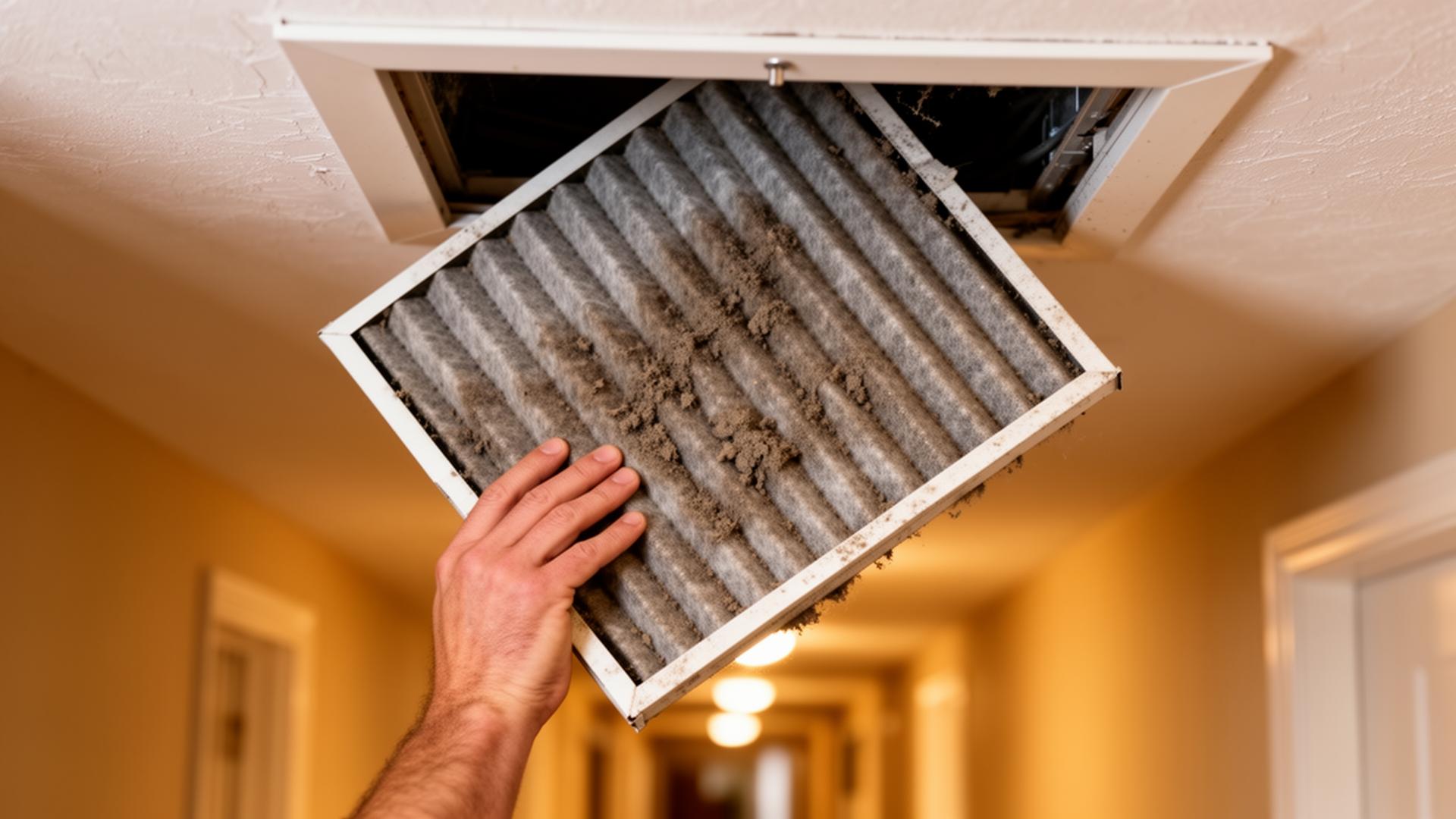
What to do:
- Find your return vent (usually a large vent in the ceiling or hallway wall)
- Pop it open and pull the filter out
- If you can''t see light through it, it''s done
If the filter looks like the one above, swap it. Then turn the system off at the thermostat for 2–3 hours to let any ice on the coil melt before you turn it back on. Running an iced-up system makes it worse.
2. Check the breakers — especially after a storm
Texas thunderstorms trip breakers. A lot of them. We get a surge of "AC won''t turn on" calls every spring and summer the morning after a big storm, and probably half of those are just a tripped breaker.

Your AC has two breakers you need to check, and they''re not always in the same place:
- The breaker inside your main electrical panel (usually labeled "A/C," "AIR HANDLER," or "FURNACE")
- The disconnect box mounted on the exterior wall right next to your outdoor condenser unit
What the main panel looks like
On most San Antonio homes, the main panel is a gray metal box mounted on an exterior wall — often the side of the garage or the back of the house.
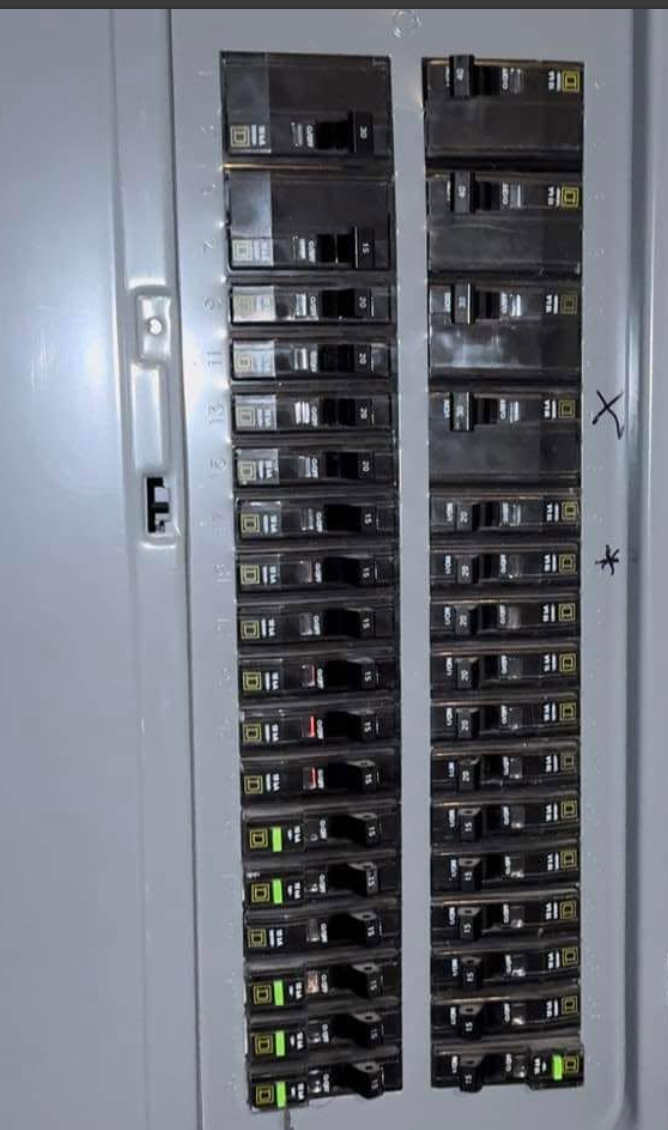
Open the door and look at the rows of switches.
What a tripped breaker looks like
This is the part homeowners miss most often. A tripped breaker does not flip all the way to OFF. It sits in the middle — slightly offset from the other ON switches, almost like it''s halfway.
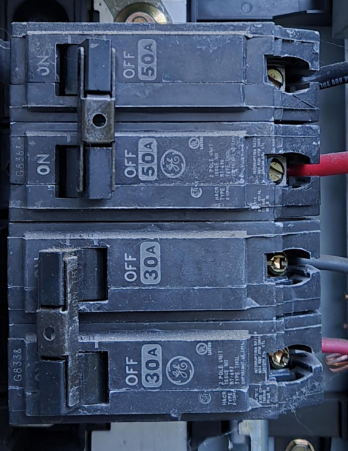
When breakers are healthy, all the switches line up cleanly in the same direction. If one is sitting just slightly off from the others — not all the way ON, not all the way OFF — that''s your tripped breaker.
To reset it: push the switch firmly all the way to OFF first, then back to ON. You have to fully cycle it. Just shoving it back toward ON from the middle position won''t do anything.
If it trips again within a minute or two, stop. That means something in the system is pulling too much current, and that''s a real diagnostic call. Don''t keep resetting it.
3. Check the float switch (and the drain pan)
In Texas humidity, your AC pulls gallons of water out of the air every day. That water runs through a small drain line. When the line clogs — and it eventually will — water backs up into a pan under the indoor unit.
Sitting in that pan (or on the side of the drain line itself) is a small plastic device called a float switch. Its job is simple: when water rises, it floats, and it shuts your AC off so you don''t end up with water dripping through your ceiling.

How it works: when the drain line clogs, water backs up, the float lifts, and the switch cuts power to the AC before water spills out.
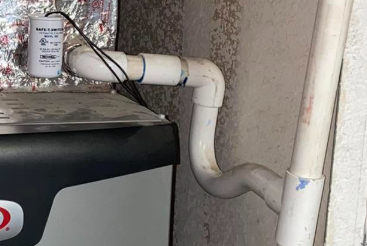
What it actually looks like in your attic or closet — a small white device wired into the PVC drain line right next to the air handler.
What to look for:
- Climb up to the attic (or wherever your indoor air handler lives) — carefully
- Find the white PVC pipes coming off the unit
- Look for a small plastic cylinder with thin wires running from it, either clipped onto the pipe or sitting in the drain pan
- Is there water standing in the pan? Is the float pushed up?
If yes, your drain line is clogged. The AC isn''t broken — it''s doing exactly what it''s supposed to do, refusing to run until the water clears.
4. Find where the drain line terminates
Your condensate drain line ends in one of two places — and knowing which one you have changes how you unclog it.
Under the bathroom sink (about 80% of San Antonio homes)
Most homes route the drain into the nearest bathroom sink's P-trap. Open the cabinet and look for an extra line — often a small black rubber hose or white PVC — clamped into the sink drain.
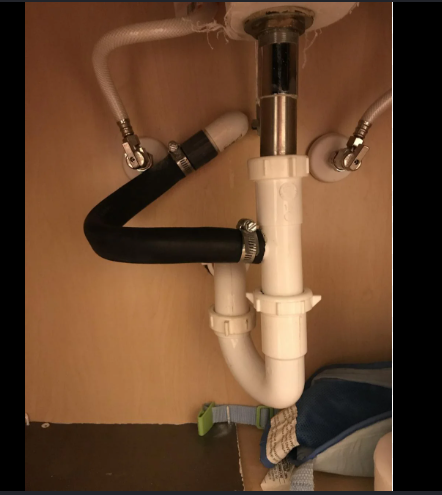
If that sink is slow or smells funky, the AC line and the sink share a clog. Run hot water and dish soap down the sink, or pour a cup of white vinegar into the AC line cleanout at the air handler.
Outside, sticking out of the brick
The other end of that drain line comes out the side of your house, usually as a short white PVC pipe sticking out of the exterior wall. Some have a cap, some don''t.
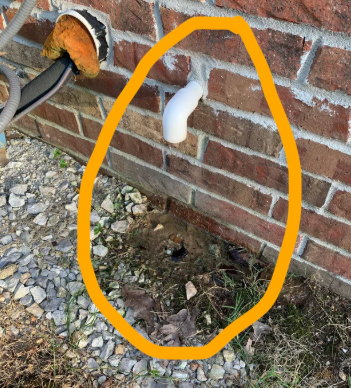
What to do:
- On a normal day with the AC running, water should drip slowly out of this pipe. If it''s bone dry on a humid Texas afternoon, the line is clogged
- If there''s a cap on top of the pipe (a cleanout), you can unscrew it and peek inside. Algae and slime build up over time and block the flow
- A wet/dry shop vac held over the outdoor end of the pipe will pull most clogs out in about 60 seconds. Seal around the pipe with a rag so you get good suction
Once the line clears, the float drops, and the system fires right back up.
When to stop and call us
Call us if:
- Breakers trip again right after you reset them
- You can hear the outdoor unit humming but the fan isn''t spinning
- The system runs but blows warm air, and the filter is clean and there''s no ice on the coil
- You smell anything burning, ever
- Anything looks scorched, melted, or chewed by critters (we see it more than you''d think)
We''re a family-owned shop and we''ve been doing this in San Antonio long enough to know that half of "broken AC" calls are one of the four things above. We''d rather you fix it free in 10 minutes than pay us to do it for you.
But when it''s a real repair — when you need somebody on the roof, in the attic, or on the refrigerant gauges — we''re a phone call away. (210) 600-5091.
We''ll quote it honest, over the phone or in your driveway, and we''ll do it right.